
What Intended Use Means In This Context
Intended use describes the real-world situation in which a Bible cover is used.
It does not refer to personal preferences or abstract categories. It refers to how often the Bible is carried, where it is taken, and what conditions it is exposed to during normal use.
A Bible cover is not used in isolation. It is handled, transported, set down, opened, and stored as part of everyday life. Intended use captures that reality and explains why the same cover can work very well for one situation and poorly for another.
This page explains intended use as a decision lens, not as a list of lifestyle labels.
It does not determine which material or size is correct. It explains how real-world usage changes which trade-offs matter after fit and material are understood.
Why Intended Use Matters When Choosing A Bible Cover
A Bible cover that stays mostly at home does not face the same demands as a cover that travels daily.
When intended use is ignored, decisions tend to focus too much on appearance or general recommendations. That often leads to covers that feel inconvenient, wear out faster than expected, or fail to protect the Bible properly.
Intended use matters because it determines which trade-offs actually matter, and which options should be excluded early before overthinking materials or features.
It helps clarify when portability should be prioritized, when protection should come first, and when storage features add real value instead of unnecessary bulk.
Intended Use Works Together With Size And Material
Intended use is most effective after the Bible itself and its size are understood [/bible/size/], and after material behavior is clear.
Bible size determines whether a cover can physically fit and function at all.
Material determines how the cover behaves over time in terms of durability, protection, and weight, which is explained in more detail when reviewing material behavior.
Intended use determines how those properties are experienced in daily life.
For example, a heavier and more protective material may be acceptable when the Bible is rarely carried, but it may feel cumbersome when the Bible is taken outside every day. Likewise, a lighter material may feel comfortable for frequent travel but may not offer enough protection in rough environments.
To understand size constraints, see the bible size guide.
Common Usage Contexts And How They Change Priorities

Intended use often comes down to a small number of recurring patterns.
When a Bible is carried frequently, portability and ease of handling tend to matter more. Added weight becomes noticeable, and bulky designs can quickly feel inconvenient.
When a Bible is exposed to rough handling, crowded bags, or frequent movement, protection becomes a higher priority. In these cases, durability and structural support matter more than keeping the cover as light as possible.
When a Bible is primarily used at home or in a single location, portability becomes less important. A slightly heavier or more structured cover may work well without causing inconvenience.
When notes, bookmarks, or small items are regularly carried alongside the Bible, storage features start to matter. In these situations, internal pockets or compartments can improve usability, but they also add bulk and weight that may not be necessary for other use cases.
Intended use helps explain why no single Bible cover is ideal for every situation, and why ignoring context often leads to covers that feel inconvenient or mismatched within weeks of use.
Intended Use And Gift Decisions
Intended use becomes especially important when choosing a Bible cover as a gift, because the buyer is deciding without firsthand knowledge of daily handling habits.
The buyer’s preferences may not match how the recipient will actually use the Bible. A cover that looks appealing may not fit the recipient’s daily routine or handling habits.
Thinking through where and how the Bible will be used helps reduce the risk of choosing a cover that feels impractical after a short period of time. In gift situations, balanced choices that avoid extremes tend to work better than highly specialized designs.
Practical Implications Of Misjudging Intended Use
When intended use is misunderstood, the results are usually consistent.
A cover may feel heavier than expected, even when the material itself is high quality.
Protection may feel insufficient when the Bible is exposed to frequent movement or pressure.
Storage features may feel unnecessary or intrusive when they are rarely used.
In many cases, dissatisfaction with a Bible cover is not caused by poor construction. It is caused by a mismatch between how the cover is designed to perform and how it is actually used.
How Intended Use Guides Confident Decisions
Intended use helps narrow choices by removing options that do not fit real-world conditions.
Instead of asking which cover is best in general, intended use reframes the question.
It shifts the decision from general quality to situational fit.
This approach reduces guesswork and helps ensure that size, material, and design choices support how the Bible will actually be handled.
Where Intended Use Fits In The Decision Process
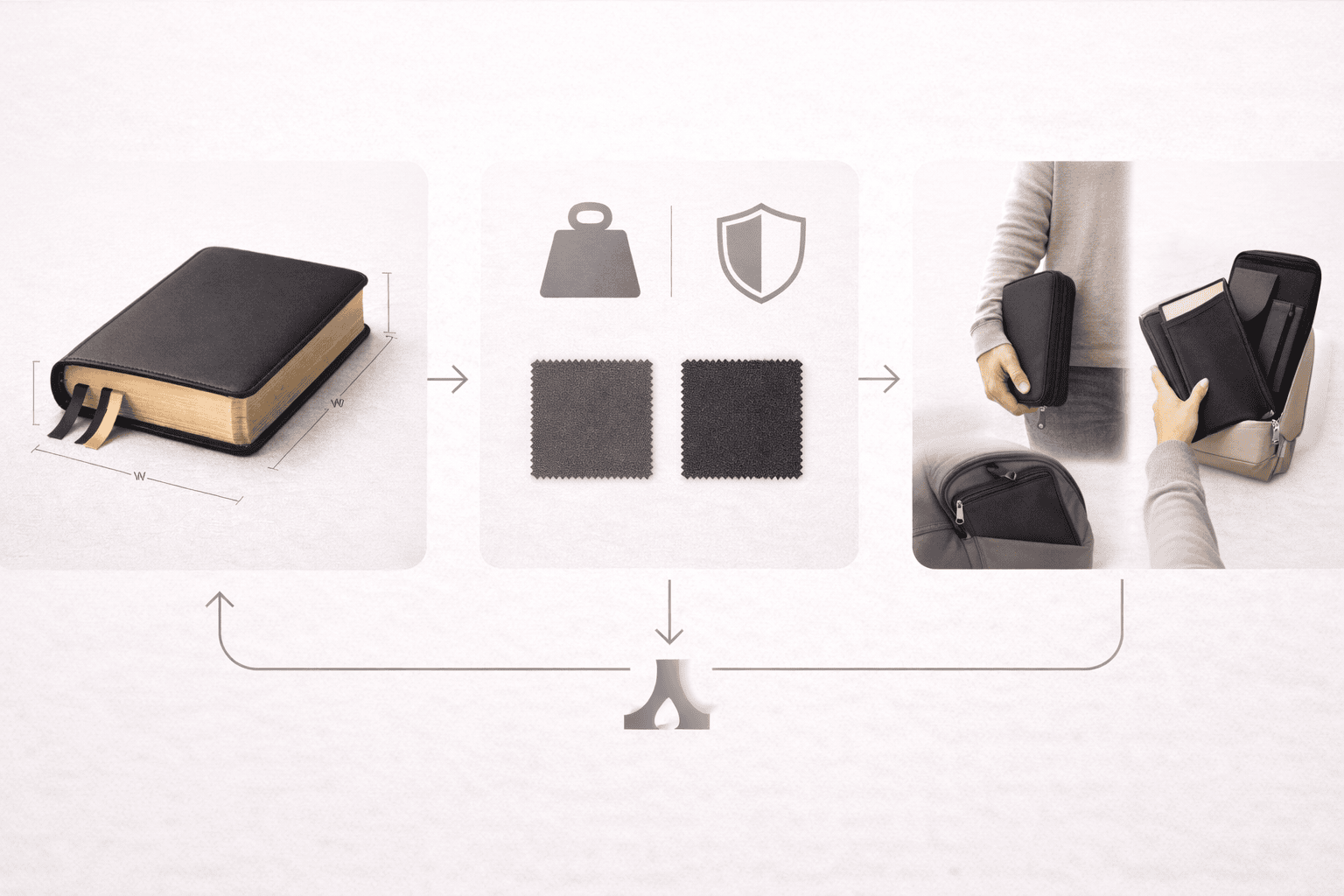
Intended use acts as the final filter once size and material are understood.
Intended use is most effective after the Bible itself and its size are understood, and after material behavior is clear.
Once fit compatibility is confirmed and material trade-offs are understood, intended use helps finalize the decision by aligning those factors with real-world needs.
This is why intended use appears after size and material in the overall decision flow.
Where To Go Next
At this point in the process, intended use acts as a final check.
If a cover fits the Bible and the material behavior is understood, intended use confirms whether the choice will feel practical in real life.
If you have not already done so, start by understanding the Bible as a physical object.
Then confirm size and fit compatibility.
Review how different materials behave over time.
After that, use intended use as the final filter to choose a cover that fits real life, not just specifications.
Intended use does not point to a single “best” cover. It explains why different real-world contexts require different trade-offs when choosing a Bible cover.